
Sane Guruji
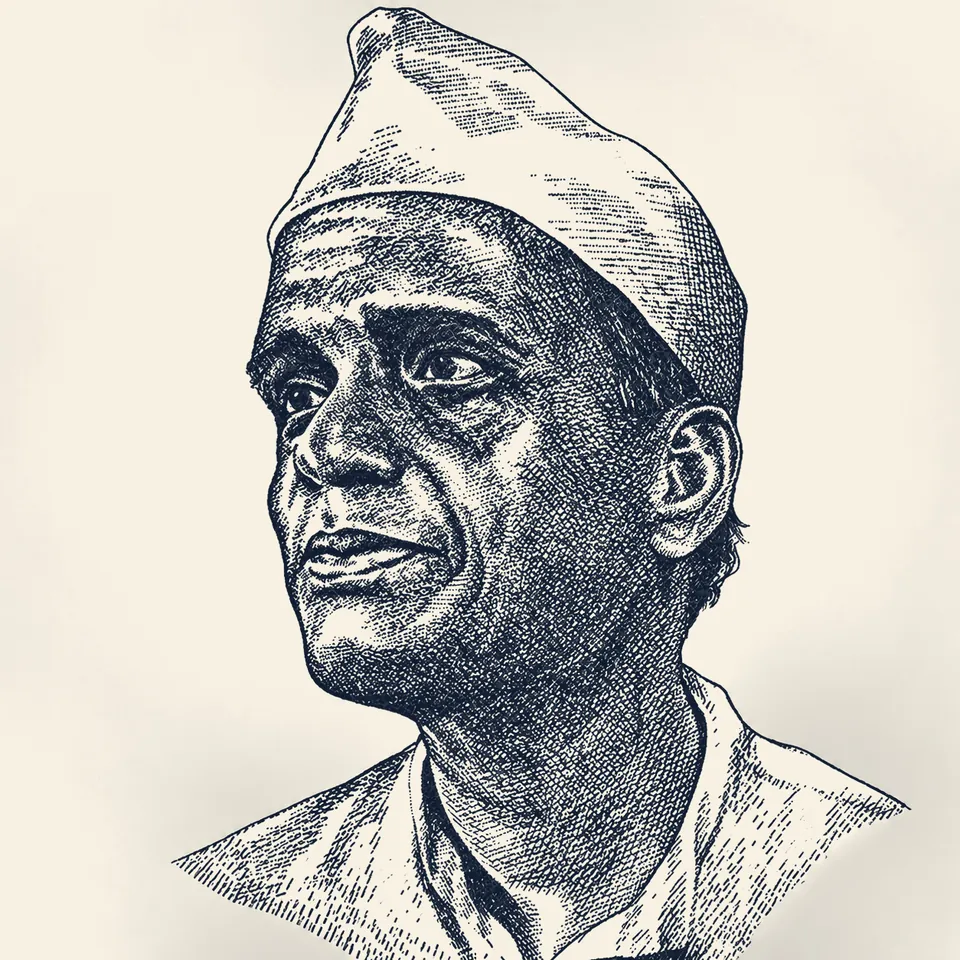
Pandurang Sadashiv Sane (1899–1950) — teacher, writer and freedom fighter — whose name the Mandal has carried since its founding in 1969, and whose work in Khandesh shaped its founder.
A teacher first
Pandurang Sadashiv Sane was born on 24 December 1899 and began his schooling at Palgad. Maharashtra knows him as Sane Guruji — Guruji means “respected teacher” — because teaching is where his public life began. After a Master's degree in 1924 he taught at the Pratap High School in Amalner, in Khandesh — the same wider region in which Shahada lies — from 1924 to 1930.
The Mandal's own note on him remembers a student of philosophy, a lover of students and a powerful speaker. His patriotic speeches at Amalner drew thousands of young men and women of the region into the freedom movement.
A writer for the heart
His best-known book, Shyamchi Aai (“Shyam's Mother”), was written in prison in 1933 and is among his best-known works. He wrote many more novels and stories, among them the story collection God Goshti, translated works, and biographies of figures from Gopal Krishna Gokhale to Mahatma Gandhi and Vinoba Bhave.
On 15 August 1948 he started the weekly Sadhana.
Freedom, equality and service
He was first imprisoned on 17 May 1930, for fifteen months, in the Dhulia jail and then at Tiruchirappalli. In 1932 he was in the Dhulia prison with Vinoba Bhave and took down the Geeta Pravachane as Vinoba delivered them. He was imprisoned several times in the freedom movement.
His work for people excluded by caste includes the Vitthal temple at Pandharpur: he fasted to press for it to be opened to those who had been barred because of caste; the temple was opened to all on 10 May 1947, and the fast ended. A matter of public record
His life put teaching, equality and service to others in the same sentence. He passed away on 11 June 1950.
The name and the Mandal
The Mandal took Sane Guruji's name at its founding in 1969 — in Marathi, पूज्य साने गूरूजी विद्या प्रसारक मंडळ, शहादा. The Mandal's account of its founder, Annasaheb P. K. Patil, describes him as a disciple of Sane Guruji and a person of staunch faith in the teachings of Mahatma Gandhi; it records that he often spoke of the principle Deto to Dev — “the one who gives is God.”
Readers will recognise the same concerns in what the Mandal says it stands for today: equality of opportunity, education for those with the least access to it, and an environment in which young people are safe to learn. The colleges' own websites also describe Sane Guruji as the Mandal's namesake and inspiration.